Table Of Content
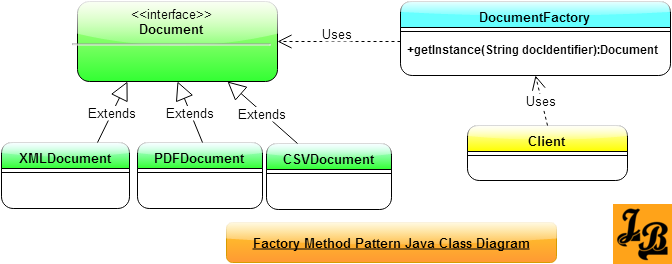
The factory design pattern is used when we have a superclass with multiple subclasses and based on input, we need to return one of the subclasses. This pattern takes out the responsibility of the instantiation of a Class from the client program to the factory class. We can apply a singleton pattern on the factory class or make the factory method static. The factory design pattern is used when we have a superclass with multiple sub-classes and based on input, we need to return one of the sub-class. This pattern takes out the responsibility of the instantiation of a class from the client program to the factory class. Let’s first learn how to implement a factory design pattern in java and then we will look into factory pattern advantages.
Step 1
This pattern is also used to provide different kinds of iterators based on our requirements. The iterator pattern hides the actual implementation of traversal through the Collection and client programs use iterator methods. Behavioral design patterns are a subsetof design patterns in software development that deal with the communication and interaction between objects and classes. They focus on how objects and classes collaborate and communicate to accomplish tasks and responsibilities. Singleton Method is a creational design pattern, it provide a class has only one instance, and that instance provides a global point of access to it.
The Intent of Factory Method:
The object that joins these unrelated interfaces is called an adapter. Decorator Method is structural design pattern, it allows to add behavior to individual objects, either statically or dynamically, without affecting the behavior of other objects from the same class. Composite Method is structural design pattern, it’s used to compose objects into tree structures to represent part-whole hierarchies.
Creational Design Patterns

In this article, we will dive deeper into one of these methodologies - namely, the Factory Method Pattern. In Java, factory pattern is used to create instances of different classes of the same type. In my previous post, “Singleton design pattern in java“, we discussed various ways to create an instance of a class such that there can not exist another instance of same class in same JVM.
2 Iterator Method
The Factory design pattern is a creational pattern that separates object creation from its usage. It introduces a factory class, responsible for creating instances of objects based on a specified interface or base class. The client code interacts with the factory, requesting objects without directly knowing the concrete implementation details. The factory class encapsulates the creation logic, allowing for easy modification or extension of object creation without impacting the client code. The pattern provides a standardized interface for object creation, ensuring that the Object Creation Process remains consistent throughout the application. In software development, object creation can sometimes become complex and tightly coupled to implementation details.
Creational Design Pattern — Factory Method
Batik: a cultural dilemma of infatuation and appreciation - The Jakarta Post
Batik: a cultural dilemma of infatuation and appreciation.
Posted: Tue, 29 Nov 2016 08:00:00 GMT [source]
Adding Ships into the app would require making changes to the entire codebase. Moreover, if later you decide to add another type of transportation to the app, you will probably need to make all of these changes again. Design patterns are solutions to general problems that software developers faced during robust scalable software development. To master the Factory Design Pattern in Java, it's beneficial to collaborate with seasoned professionals.
Factory is an object for creating other objects – formally a factory is a function or method that returns objects of a varying prototype or class. This is an interface or an abstract class that declares the method for creating objects. In the example, CurrencyFactory is the factory interface with the method createCurrency().
For example, to add a new product type to the app, you’ll only need to create a new creator subclass and override the factory method in it. I think the explanation in ‘Factory Design Pattern Advantages’ section is quite verbose. So I think the first advantage in the section should be what I said above at least. So far we learned what is Factory method design pattern and how to implement it. I believe now we have a fair understanding of the advantage of this design mechanism.
Based on the different implementations of comparator interfaces, the objects are getting sorted in different ways. Adapter Method is a structural design pattern, it allows you to make two incompatible interfaces work together by creating a bridge between them. Now on the client code we can create different types of coins using the factory class. This is an interface or an abstract class that declares the method(s) that need to be implemented by the concrete products.
That method will create and return different types of objects based on the input parameter, it received. In this article, we’ve explored the Factory Pattern in the context of a food ordering system. Keep in mind that this is just one of many applications for this pattern. The implementation of the bridge design pattern follows the notion of preferring composition over inheritance. The builder pattern was introduced to solve some of the problems with factory and abstract Factory design patterns when the object contains a lot of attributes. Flyweight Method is a structural design pattern, it is used when we need to create a lot of objects of a class.
The abstract factory pattern is similar to the factory pattern and is a factory of factories. Creational design patterns are a subset of design patterns in software development. They deal with the process of object creation, trying to make it more flexible and efficient. It makes the system independent and how its objects are created, composed, and represented. The factory design pattern offers a solution for efficient object creation in software development.
Behavioral patterns provide a solution for better interaction between objects and how to provide loose-coupling and flexibility to extend easily. The flyweight design pattern is used when we need to create a lot of Objects of a Class. Mediator Method is a Behavioral Design Pattern, it promotes loose coupling between objects by centralizing their communication through a mediator object. Instead of objects directly communicating with each other, they communicate through the mediator, which encapsulates the interaction and coordination logic. Create a Factory to generate object of concrete class based on given information.
If you change the original code, then the method itself looses the point because it needs to be rewritten every time someone wants to make a small change to the ship. Since the instantiations are hard-coded, you could either create a duplicate of your original method or change its code. Specifically, the Factory Method and Abstract Factory are very common in Java software development. The Factory Method Pattern is one of several Creational Design Patterns we often use in Java. Their purpose is to make the process of creating objects simpler, more modular, and more scalable. I hope, I have included enough information in this Java factory pattern example to make this post informative.
Factory Method is a creational design pattern, that provide an interface for creating objects in superclass, but subclasses are responsible to create the instance of the class. The decorator design pattern is used to modify the functionality of an object at runtime. At the same time, other instances of the same class will not be affected by this, so the individual object gets the modified behavior. We use inheritance or composition to extend the behavior of an object, but this is done at compile-time, and it’s applicable to all the instances of the class.
Use the Factory Method when you don’t know beforehand the exact types and dependencies of the objects your code should work with. As a result, you will end up with pretty nasty code, riddled with conditionals that switch the app’s behavior depending on the class of transportation objects. Adding a new class to the program isn’t that simple if the rest of the code is already coupled to existing classes. However, this would make the code too dependent on each specific change and hard to switch between them easily. Through this article, I have listed what a Factory Design Pattern is and how to implement a Factory.
Wax print: Africa's pride or colonial legacy? - Myjoyonline
Wax print: Africa's pride or colonial legacy?.
Posted: Fri, 26 Jun 2020 07:00:00 GMT [source]
Design patterns in Java help developers create more maintainable, flexible, and understandable code. They encapsulate the expertise and experience of seasoned software architects and developers, making it easier for newer programmers to follow established best practices. Let’s see how to use the factory class of our design to get the object at run time. Sooner or later, a desktop program, mobile app, or some other type of software will inevitably become complex and start exhibiting certain kinds of problems. These problems are typically related to the complexity of our codebase, non-modularity, inability to separate certain parts from each other, etc.


No comments:
Post a Comment